Understanding the Effect of Diminished Reality Screen Filters Inproceedings
Eneas Holanda Arrais, Alex Noh, David Lindlbauer, Wolfgang Stuerzlinger
Abstract:
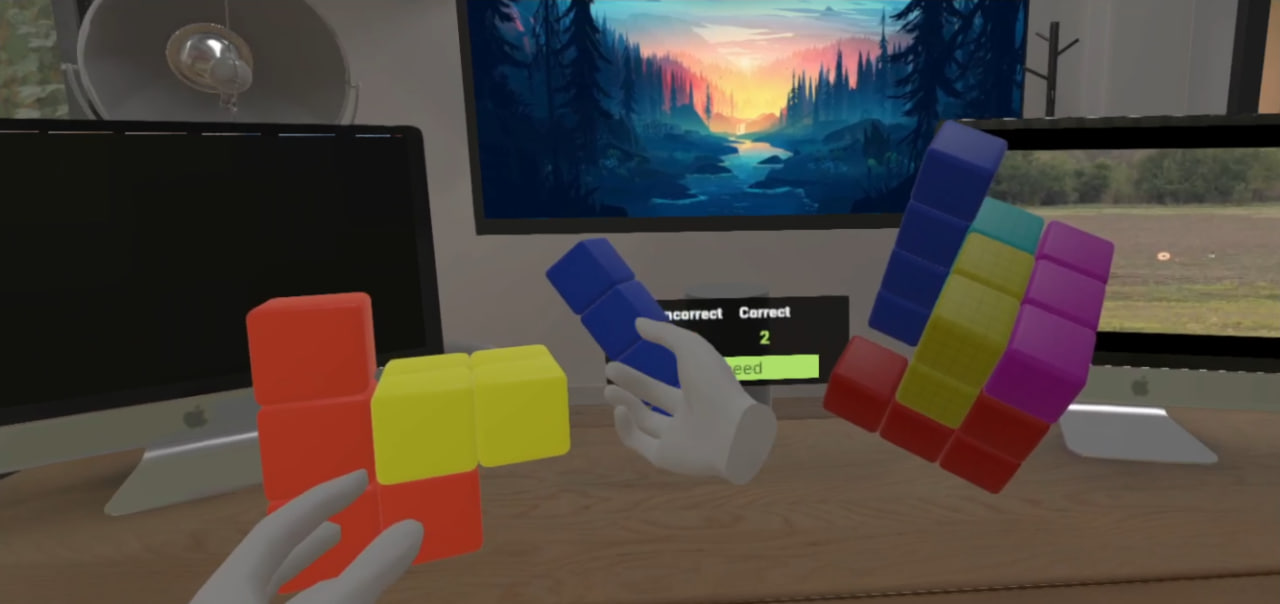
Screens in shared environments produce dynamic, attention-capturing stimuli that can distract users from primary activities. Diminished Reality (DR) screen filtering offers a plausible way to mediate such content by visually blocking or replacing it. However, less is known about whether this intervention reduces distraction across different task contexts. We simulated five DR screen filters (Block, Dim, Wallpaper, Replace, and Freeze) in VR and evaluated them in two user studies across three task types: a 3D puzzle assembly, a Stroop color-naming task, and a structured conversation. No comparable differences in perceived distraction or task performance were detected during the visually anchored tasks (puzzle assembly, Stroop). However, the Block filter significantly reduced self-reported distraction (Cohen’s d = 0.80) during the conversation task, and qualitative interview data supported this finding. These mixed results show the bounded utility of DR screen filtering. Visual blocking helped reduce perceived distraction during conversation, but did not produce general benefits across the tasks we tested. Participants preferred static aesthetic filters, especially Wallpaper, for single screens and used simple blackout most often in multi-screen scenarios. They favored static over dynamic filters and valued user control over filtering.